Thursday, January 28, 2021

Creative Obedience


Late last December, I was listening to a devotional app (Lectio 365), and the speaker for the day encouraged me to spend time listening to God for a phrase to carry with me into the new year. He also suggested I find an accompanying Scripture verse and choose a new spiritual discipline. Sometimes exercises like this are helpful. Sometimes they’re not. But I felt moved to try it.

The verse that immediately came to mind was an old favorite from the Psalms: “My heart is stirred by a noble theme. I recite my poems for the king. My tongue is the pen of a skillful writer” (Psalm 45:1). The phrase that presented itself was “Creative Obedience.” That got me excited.

The new discipline to practice came from an unusual source: the poet William Stafford. It has special significance for me because of my personal contact with Stafford. In the early 90s, just a year before Stafford’s death, he invited Hal and me to his home (a story in itself). We spent a whole morning with him, reading our poems to each other and talking about life and art. I asked him to tell us about his own creative disciplines. William Stafford told us he got up every morning at 4:00, made coffee (that part is important!), then sat in silence until a poem came to him. It must be true; he was prolific!

I’ve been mulling that over ever since, wondering if I could possibly do something like that.

Well, I’m going to find out. I took it on as my new discipline for the year (except for the 4:00 a.m. part but including the coffee).

I hesitated to blog this because it kinda makes me accountable. I might just end up embarrassed. But then again, maybe no one will notice. Maybe it only matters to me and (maybe) to God.

At any rate, so far so good for the month of January. I’m having fun. I actually like some of the poems. Others will stay safely in my journal. No pressure. Creative obedience.

Here’s one of my daily offerings, written after reflecting on my reading from the book of Exodus.


Magic and Miracles


Moses’ staff

like Gandalff’s

looked common enough

but the power that flowed

through it

hissed with venom

summoned blood from the river

heaped waves into walls

brought water from a rock

and defeated an army.


God also asks me

What do you have in your hand?

No shepherd

all I have is this pen.

It has yet to turn into a snake

or fill the bathtub with blood.

Where are the miracles?

Maybe this year?


Monday, December 28, 2020

Best Books Read in 2020

 Because this was the year of the pandemic, natural disasters and political/social turmoil, I read even more than usual. Most of it went beyond escape. Thus, my list of good books is longer than usual. It was a rich year, and I gained insight and hope to help face the multiples ways that darkness was attacking from the outside. Here’s my partial list:


FICTION:


Louise Penny, Still Life
(2005), etc.: Canadian mystery writer Louise Penny was my biggest discovery of the year. I found her early, before the pandemic shutdowns, and I must confess that I binged on all 14 of her books in the Inspector Gammach series. (Penny has written one a year since 2005.) She is a good writer on different levels: Plot—in every book the ending surprised me, but also caused me to say, “But of course!” As a regional writer: Her descriptions of Canadian cities and natural wonders, the customs, the languages, the food are superb. In her character development: This most of all. The people are depicted as real human beings. Armand Gammach was my favorite. Not perfect, but an example of integrity and grace. In this election year, I found myself wishing that he were running for US president. Two problems with that scenario: 1) He’s Canadian. 2) He’s fictional. Oh, well. One can wish. The basic values of the book resonated: the insights into human nature and on the nature of evil, and the conviction that the kindness in the world will eventually overcome the evil. Penny doesn’t write as a Christian, but that almost sounds like gospel.

Kristin Hannah, Winter Garden (2010): I read several novels by this author. Not great, but good, with page-turning plots.

Gail Honeyman, Eleanor Honeyman Is Completely Fine (2017): One of the best novels of the year, it depicts the relationship between three marginal, socially inappropriate people. It encourages compassion and understanding for all strange and damaged people.

Wallace Stegner, Crossing to Safety (1987): A good “old” book that centers on the friendship between two couples, explores the interior of each marriage, and shows how all these complex relationships develop over time, helped by the courage to stand by commitments.

John Irving, A Prayer for Owen Meany (1989): Another excellent “old” book and another book about a marginal character. The plot centers on the long-time friendship between the narrator, John Wheelright, and the strange Owen Meaney, a little person with a loud grating voice who believed that God had given him the date of his death as a heroic rescuer of Vietnamese children. A simultaneously serious and hilarious book. Almost like Latin American magical realism in parts.

John Williams, Stoner (1965): Yet another “old” book about a marginal character. Dr. Stoner is a university literature professor who lives a life of hidden and unrecognized excellence in an institution whose inner politics frustrate him. His dedication to teaching literature and his love for his subject hold him steady. I loved this book.

Nina George, The Little Paris Bookshop (2016): This translation from the German is a delightful story about the value of reading for comfort and transformation, and the need to grieve our losses.


Julia Phillips, Disappearing Earth
(2019): Another favorite this year. The story takes place on the Kamchatka Peninsula of Russia, and both the geography and Russian culture are key to the book. (The author appears to know and love Russia.) Two small sisters are kidnapped and disappear, and for the next year different families and characters are interwoven into the tragic mystery. A dark story, but with surprising flashes of light.

Ann Pachette, Dutch House (2019): An old ornate Dutch mansion is one of the main characters, along with the human families and complicated relationships that whirl around it. It’s about family, loss, mistakes, forgiveness, and coming home again. Intricate plot, well written.

Marilynne Robinson, Jack (2020): Robinson never disappoints. This latest book in the family saga that began with Gilead goes to the next generation as it explores the intertwining of human nature and grace as people struggle toward maturity.


NON-FICTION:

Will Schwalbe, The End of Your Life Book Club (2012): Memoir of Schwalbe’s time with his mother as she is dying of pancreatic cancer, a two-year process. Mother and son make a list of books to read and discuss, and this memoir chronicles their discussions. It addresses end of life issues, the importance of reading good books, and life-long relationships. Their discussions provide the cohesive thread for the life stories of Will and his mother, both remarkable people. The book list (included in the appendix) helped shape some of my reading this year.

Irina Ratushinskaya, Grey Is the Color of Hope (1988): The author’s memoir of her three years in a Soviet prison camp in the early 1980s. Her crime: being a poet. She documents the cruelty and suffering, but the book is more a documenting of the human spirit and the community of friends that formed in her prison cell group. Ratushinkaya has since immigrated to the US where she teaches in a university and continues to write poetry. I heard her read years ago in a writers conference at Calvin College.


Steve Inskeep, Imperfect Union: How Jessie and John Fremont Mapped the West, Invented Celebrity, and Helped Cause the Civil War
(2020): A fascinating piece of US history of which I was previously unaware. Involves the mapping and settling of Oregon and California, the California gold rush, the movement toward the abolition of slavery, and all sorts of political intrigue. The relationship of this complex couple is an important part of the story. What a strong woman.

Greg Boyd, The Myth of a Christian Nation: How the Quest for Political Power is Destroying the Church (2005): Although written over 15 years ago, this analysis seems timely and relevant in today’s political/religious atmosphere. I’ve long appreciated Boyd as a theologian.

Bill Bryson, The Body: A Guide for Occupants (2019): A well-written collection of amazing facts about the human body, together with a history of medical approaches to what happens when body parts begin to betray us. All told with Bryson’s typical sense of humor. Not only a fun read but a good reference book.

Michelle Ule, Mrs. Oswald Chambers: The Woman Behind the World’s Bestselling Devotional (2017): Very informative story of the woman responsible for collecting her late (and young) husband’s writings into My Utmost for His Highest. I hadn’t realized Chambers had died so young or how prolific a preacher/writer he was in his short life. Thank God for his wife who took such careful notes and transcribed all her husband’s sermons.

Paul Kalanti, When Breath Becomes Air (2016): A brain surgeon’s memoir, written as he knew he was dying of brain cancer. I love his metaphor for death: “when breath becomes air.”

Thomas Dubay, The Evidential Power of Beauty: Science and Theology Meet (1999): This Catholic theologian focuses on the unity of beauty and simplicity in truth, whether it be scientific discoveries or a personal perception of God. The book culminates in a consideration of the glory/splendor/radiance (all aspects of beauty) of God. Inspiring and challenging.


POETRY AND PRAYERS:

Brian Doyle, A Book of Uncommon Prayer (1999): Relevant prose prayers for everyday life, using non-religious language and lots of humor.


John O’Donohue, To Bless the Space Between Us: A Book of Blessings
(2008): A new discovery, this Irish priest writes with both depth and beauty. I found much that resonated in my spirit during this year of the pandemic.

Ted Loder, Guerrillas of Grace (1984): An old favorite, revisited this year. Loder seems the Protestant version of the Catholic Brian Doyle, and his prayers are equally relevant and refreshingly non-religious.

Kay Ryan, The Best of It: New and Selected Poems (2010): Ryan was US Poet Laureate from 2008-2010, yet she had somehow escaped my notice. No more. I love her short incisive looks at culture and language. She’s become a new favorite.


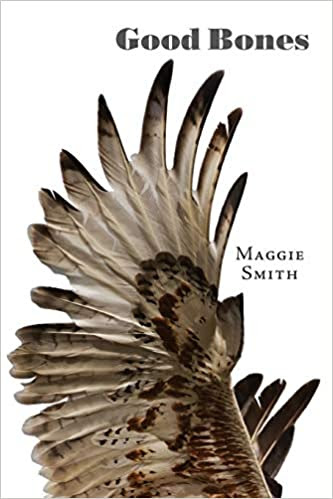
Maggie Smith, Good Bones
(2019): Another new discovery, Smith writes about motherhood and family in this small volume. I especially love the title poem, “Good Bones.”

Elizabeth Barrett Browning, Sonnets from the Portuguese (1850): Another re-visitation of an old favorite. Barrett Browning contrasts in style (using only the strict sonnet form in this collection) to Ryan and Smith, but she was equally a pioneer for her times, and a rebel who broke from a harsh family situation to follow her heart. The love sonnets are still beautiful.

Friday, October 16, 2020

C. S. Lewis on "trumpery"


I recently re-read one of my favorite C. S. Lewis poems and discovered it to be surprisingly contemporary.


THE APOLOGIST’S EVENING PRAYER


From all my lame defeats and oh! much more

From all the victories that I seemed to score;

From cleverness shot forth on Thy behalf

At which, while angels weep, the audience laugh;

From all my proofs of Thy divinity,

Thou, who wouldst give no sign, deliver me.


Thoughts are but coins. Let me not trust, instead

Of Thee, their thin-worn image of Thy head.

From all my thoughts, even from my thoughts of Thee,

O Thou fair Silence, fall, and set me free.

Lord of the narrow gate and the needle’s eye,

Take from me all my trumpery lest I die.


After my initial chuckle (I had forgotten that word), I realized the prayer/poem was really about me. Lest I become smug in my judgments, I was reminded that I, too, am capable of arrogance and small-mindedness.


Lord Jesus, have mercy on us all.


Monday, May 11, 2020

Choosing life: celebrating the milestones


Life’s great moments don’t stop for a pandemic. St. John reminds us that the darkness has never overcome the light.
Family milestones are a light, commemorating past achievements and illuminating the path ahead. Or at least the beginning of the path.
Our family is celebrating three graduations this spring. Three of our grandchildren have reached an important milestone, and while their official ceremonies have been cancelled (along with the parties and other adventures), we still celebrate.
On May 2, our oldest grandchild, Breanna Joy (daughter of David and Debby), became Dr. Breanna Becker. Bree completed her graduate program in physical therapy at George Fox University. We’ve already benefited from her skills (free to grandparents!), applied to Hal’s back and my dizziness. We’re happy that she loves her new profession and has a sense of call to this service.
Our two high school graduates are Alandra Uwizera Thomas (youngest daughter of David and Debby) and Thomas Reilly Gault (oldest child of Jon and Kristin). Alandra and Reilly not only will miss their ceremonies, they both missed their senior proms. About missing the prom, Reilly felt great relief. But Alandra was disappointed. So David and Debby put on their own prom. The family, including sister Gwen, cleaned the house, dressed up in formal attire, had a special gourmet dinner, and then danced in the field next door, to the cheers of their neighbors. Alandra’s smiles tells it all.

Bree looks forward to getting a real job in a clinic. Alandra is going to major in engineering at George Fox University, while Reilly is enrolled in the University of Oregon’s School of Music, specializing in percussion and jazz.
This coming Saturday evening, the extended family will celebrate together via Zoom. From five different households, we will meet over five different dinner tables to eat and talk. Each of our graduates will share their hopes and dreams. Maybe we can persuade Reilly to give his valedictorian speech. (Kristin says he had been preparing it before the pandemic struck.)
We will bless each one in prayer.
And we will celebrate these three marvelous young people.
The light is shining.


                  Our apartment door at Friendsview 

Saturday, April 25, 2020

Choosing life: creative, albeit ridiculous, worship


Here on the fifth floor of Friendsview, the retirement community where I live, we’ve decided to worship together at vespers every Sunday afternoon. We, like everyone else, are under “lock down” rules and can’t congregate.
So, human creativity to the rescue!
The first two weeks we all opened our apartment doors at 4:00 p.m. on the dot, then stood in our door ways, waving and shouting (some are hard of hearing) at each other. Then, music was played, songs were sung, the Lord’s Prayer loudly prayed—and worship concluded with more waves and shouted blessings.
It all passed quickly within the space of ten minutes, but it reaffirmed, not only our faith, but our sense of family up on the fifth floor.
So I wrote it all up in an article, shared it with the Friendsview administration, and sent our director into what he named as a “near panic.” Within a few days, a new restriction was put in place against “doorway meetings.” It seems singing and shouting expel moisture and germs with a force that might overcome the distance between our doors.
I admire and am grateful for the care our administration takes of us. We are, I am told, a vulnerable people. So we complied, of course, with the new regimen, but with a sense of loss.
Until, once again—human creativity to the rescue!
We’ve amended our vespers practice, but we still worship together at 4:00 p.m. Sunday afternoons (this time, with the administration’s approval).
Here’s the procedure: At 4:00 sharp, at the sound of Howard’s trumpet or Hal's French horn, we all open our doors to a two-foot gap, then sit down comfortably in the middle of our apartments. The trumpeter, alone, walks the hall, loudly tooting his horn. Then the Singer-in-Chief, Marie, takes her turn alone in the hall, her loud soprano voice helping us keep on the same verse of the two hymns whose words we hold in our hands. Although the near-deaf among us say they can’t hear a thing, the rest of us manage to make it through the music at roughly the same pace.
Then it’s Francie’s turn, and she stands by herself in the hall and yells the Lord’s Prayer, enabling most of us to follow out loud. Hal ends our worship by walking up and down the hall playing the Doxology on his harmonica.
I miss the waving and shouting that used to come at the end, but it’s still good to worship together—to remind ourselves that God is still sovereign and we, together, are God’s family.

Sunday, April 19, 2020

Choosing life: conversing with wise writers


This time of restriction and isolation has certainly provided more time to read. The introverts among us (myself included) welcome this more than the extroverts do. At times I’m tempted to read for escape and so choose superficial mysteries, spy intrigues, or romances that encourage quick, easy reading. But I find that a week after I’ve finished such a book, I’ve forgotten the characters, the plot, or why I ever read it.
Other times I choose my reading well. Often that means re-reading an old favorite. Currently I’m re-reading Eugene Peterson’s Christ Plays in Ten Thousand Places: A Conversation in Spiritual Theology. I’m reading it very slowly.
The title itself reminds me of how much I love the poetry of Gerard Manley Hopkins. Peterson took his title from Hopkins’ poem, “When kingfishers catch fire.” The poem ends with the lines,
For Christ play in ten thousand places,
Lovely in limbs and lovely in eyes not his
To the Father through the features in men’s faces.
I’m reading the book slowly, heeding the word “conversation” in the subtitle. I frequently pause and in my imagination converse with Eugene Peterson. I ask him how he came up with this metaphor or what path he traveled to come to that insight. I offer my own thoughts. Actually, I develop my own thoughts through the means of this conversation. Often we just sit silently together.
(This shows one way an introvert interacts socially. I’ve always conversed with the authors of books that move and challenge me. In actual flesh-and-blood book discussions, I’m usually the quietest person in the room.)
Right now we’re considering the image of the Holy Spirit “hovering” over the emptiness and chaos at the beginning of creation. It comes in Genesis 1, right before God says, “Let there be light.” The eagle in Deuteronomy 32:11 also “hovers” (same Hebrew word) over the young in his nest. It’s an image of cherishing and hope for life to come. I’m finding (in consultation with Peterson) an image to guide me as I pray over this present darkness and chaos.
Actually, my imaginary conversations with Eugene Peterson have a basis in reality. About 20 years ago I visited my friend Miriam Adeney in Seattle. At the time she was teaching a class on book-writing in Regent University (Vancouver, British Colombia). I spent three days with her as observer and participant in the class.
Across the hall from Miriam’s faculty office at Regent, Eugene Peterson had his office. His book of reflections on the life of David, Leap over a Wall, had just been released. Knowing my admiration for Peterson, Miriam introduced us.
Eugene Peterson graciously invited me into his office for a conversation. Our visit was brief, probably about half-an-hour. I can’t even remember what we talked about. What I do remember is Peterson himself—his attitude of welcome, warmth, curiosity, and attentiveness. For that short visit, he was totally focused on me. His was a pastoral presence in every way. I sense that same presence as I read his books. I suppose it’s a type of gentle hovering.
This book, these conversations, are a way of choosing life today.

Thursday, April 16, 2020

Choosing life: letters from prison


I need to begin with a confession. Choosing life is hard. It’s hard during normal times (whatever “normal” may mean). It’s certainly hard now in this time of pandemic. Everyday I struggle with lethargy, some inner resistance to reaching out to communicate, to being creative, to expressing gratitude, to simply being positive. At the end of each day as I take the time to look back and reflect, I have to confess my failures, as well as thank God for the small triumphs.
Even so, I choose to choose life. Part of it is this blog. I write to myself as well as to any readers out there in cyberspace. I write as a way of groping for courage, hoping to encourage others along the way.
So, on to another way of choosing life: through the Holy Scriptures. Paul calls them “the word of life” (Phi. 2:16). It occurs to me that Paul’s prison epistles (Galatians, Ephesians, Philippians, Colossians) might be good reading material for such a time as this. Talk about isolation and restriction! A Roman prison was probably worse than what I am facing. And Paul’s context, the persecution of the early Church, while different than ours, was every bit as fraught with danger.
I start with the book of Philippians and find that it focuses on joy. Paul rejoiced in the midst of his hardship. He exhorted the believers in the city of Philippi to rejoice at all times, even as they suffered for the cause of Christ. He repeats the words “joy” and “rejoice” at least 12 times in this short letter. He encourages us to follow his example. He tells us that this is not a grit-your-teeth-and-endure-it time. Even now, this is a time to trust and rejoice.
I’m going to need some help doing that. Apparently, that help is available.