Showing posts with label books. Show all posts

Tuesday, August 2, 2022

Sneaky Peeks


My parents were Good Readers.
They had Good Taste,
and volumes of Great Books
filled the bookcases of our home.
Some of the Great Books also
had Great Pictures, and we three kids
liked to look at these, with our parents’ permission.
Being very careful, we would thumb through
The Brothers Karamazov, Ancient Chinese Poetry,
 and Don Quixote de la Mancha, fascinated, guessing
what the stories might be about


One day we made a Find.
Tucked among the Great Books
we found a collection of literary essays
from Playboy Magazine (about which we knew nothing).
It was mostly words, but here and there,
scattered between the essays, were cartoons.
We didn’t understand the captions,
but the drawings
made us laugh. All these
naked grown-ups—both men and women—gamboling
about in fields (“gambol” is the only verb that works here),
doing strange things.
Who could have thought this up?
It was both informative and hilarious.
We instinctively knew we must keep
this viewing pleasure a secret from our parents, and so
we found a hiding place in the bookcase.

One afternoon Mom popped in to find out
what we were laughing about. She saw the book.
She quietly left the room. I worried we might be in trouble.
But neither of our parents said anything.
The book, however, mysteriously disappeared.
We never saw it again.

Monday, January 10, 2022

Favorite Books Read in 2021

 This is coming a bit late, but the books are definitely not out-of-date. As usual, these include books from any year, not just 2021. Reading is one of my delights, in a pandemic or in normal life. As I write this, I realize there is no such beast as “normal life.” Reading reminds me of this.

These are listed in the order in which I read them.

FICTION:

Kristin Hannah, The Four Winds (2021): Compelling story set in the dust bowl of the 1920s-30s and the migration of people to California to work in the fields. Centers around Elsa, a woman rejected by her parents and undervalued by her husband, but courageous and resourceful, on a difficult path learning to value herself.

Barbara Kingsolver, Flight Behavior (2012): Story around the issue of climate change, centered on monarch butterflies mis-migrating to the hills of Tennessee and a country woman learning to be a scientist.

Bo Caldwell, City of Tranquil Light (2010): Moving story about missionaries to China, a fictional account but based on the lives of the author’s grandparents.

Ruth Hogan, The Keeper of Lost Things (2017): Novel of a strange man who collects little things people have lost, intending someday, after his death, to have them all returned. He also collects and redeems lost people. It’s about being lost…and then found.

Ruta Sepetys, Out of the Easy (2015): Novel of a young neglected girl’s finally successful attempts to escape from her life in New Orleans and make a future for herself.

Louise Penny, The Madness of Crowds (2021): The latest Penny murder mystery does not disappoint. Detective Gamache’s task is to follow a popular speaker whose message is persuasive and dangerous. Of course, someone is murdered, and solving it gets complicated. Issues are euthanasia, delusion vs. reality, and the nature of crowds.


Jeanine Cummins, American Dirt (2020):
Possibly the best novel I read this year. Hard to read in places because of violence and human suffering, but based on research and the experiences of thousands of migrants. Deals with drug cartels in Mexico and the attempts of so many to escape and make the journey to the US. Shows the hardships of the journey and arouses compassion as well as a fierce desire for justice and humane immigration policy.

Marjan Kamali, The Stationery Shop (2019): Set in Tehran in the revolutionary times of the 1950s. The protagonist, a young woman, finds refuge among the books in a stationery shop and there meets Bahman. Socially mismatched, they fall in love anyway. Culture as well as the revolution separate them and she escapes to America. Good insights about culture, enduring love, decency, and the power of poetry.

Fredrik Backman, Anxious People (2020): Hilarious story about a failed bank robber who finds herself inadvertently holding a group of people hostage. Full of surprises. The author seems to be saying that human beings are idiots. But loveable idiots.


NON-FICTION:


Grevel Lindop, Charles Willians: The Third Inkling (2015):
Well researched and fascinating biography of a complicated man, whose life resembles his novels. Yet I am indebted to Williams for his concept of burden-bearing (or substituted love, as he calls it).

Neil Shubin, Some Assembly Required: Decoding Four Billion Years of Life, from Ancient Fossils to DNA (2020): Fascinating account of a difficult subject for a non-scientific thinker like me. But Shubin brings it to down to a popular level while keeping his integrity as a scientist. Can’t say I understood it all, but I learned a lot.

Natasha Trethewey, Memorial Drive: A Daughter’s Memoir (2020): Do all famous writers have difficult childhoods?

Dana Greene, Denise Levertov: A Poet’s Life (2012): I loved reading the biography of one of my favorite poets, including the account of her conversion to Christianity.

Bessel Van Der Kolk, The Body Keeps the Score: Brain, Mind, and Body in the Healing of Trauma (2014): One of the best books read this year. Scientific explanation of what happens to a person during trauma and why the effects are so long lasting. Holistic in its approach, including strategies for treatment and healing.

Jim Defede, The Day the World Came to Town: 9/11 in Gander, Newfoundland (2002): True story of a small Canadian town that found itself host to 38 diverted airliners and 6,595 stranded passengers and crew. The town (population 10,000) found the resources and the generosity to care for them for three days. Inspiring and informative.

Kathryn Aalto, Writing Wild: Women Poets, Ramblers, and Mavericks Who Shape How We See the Natural World (2020). Short biographies of women writers passionate about the environment, going back to people like Dorothy Wordsworth and including such modern writers as Rachael Carson, Annie Dillard, and Mary Oliver. Interesting, inspiring, and encouraging.


Tom Michell, Penguin Lessons: What I Learned from a Remarkable Bird (2015):
Totally fun to read. A true account of the author’s adventure as a young man teaching in Argentina. While on vacation in Paraguay he rescues a penguin from an oil spill and, when the cleaned-up penguin refuses to leave his side, he finds himself forced to adopt and raise it. About ecology, the intelligence of animals, and the relationships between people and beasts.

Blaine Harden, Murder at the Mission: A Frontier Killing, Its Legacy of Lies, and the Taking of the American West (2021): Deals with the murder of Marcus and Narcissa Whitman in 1847 at the hands of the Cayuse tribe they had come west to convert and the myth (lies) that grew up around that incident. It paints a dark picture of the mission endeavor, the quarreling relations among the missionaries, and the injustice done to native peoples. In terms of the missionary endeavor and its effects, the author’s prejudices come through. Nevertheless, the history is troubling and deserves reflection and, perhaps, repentance.

Susan Orleans, The Library Book (2018): Another favorite, a history of libraries, focusing on the Los Angeles Public Library and the fire that gutted it in 1986. Between the chapters that carry forth this complicated story are delightful detours into the history of libraries in general, the history of book burning, the inner running of large libraries, the extent of a library’s services, and even the relation of large libraries to the homeless. Written in an engaging manner, I couldn’t put it down.

Phillip Yancey, Where the Light Fell (2021): A memoir of Yancey’s difficult years and the fundamentalism and racism from which he emerged. Remarkable.

Sarah Ruden, Paul Among the People: The Apostle Reinterpreted and Reimaged in His Own Time (2010): Important and well-researched study of the theology of Paul, showing how his context influenced his thinking and needs to affect our interpretation. She deals with subjects like Paul and pleasure, homosexuality, women, the state, and slavery. She says that she started her research hating Paul, but ended up loving him. Very helpful.


POETRY


Jorge Luis Peña, El país de los miedos (2014):
It was a privilege to discover and translate the work of this Cuban Quaker poet, who is well known in his own context. Among other things, he writes fantastical poems for children on adult themes.

Jarod K. Anderson, Field Guide to the Haunted Forest (2020): Excellent poetry by a young poet, blogger, and You-Tuber.

Ted Loder, Guerrillas of Grace (2004): For me, this was a return to an old favorite. Loder writes prayers in poetic form on all sorts of contemporary issues. I find this book both pleasing aesthetically and profound in its insights.

Thursday, August 26, 2021

Morning at the library


I went to the city library
yesterday and engaged in my favorite sport,
browsing. Without saying a word out loud,
I walked the aisles and spoke
with many invisible friends.
After making my choices,
I went downstairs to the check-out
counter only to discover
that technology had made it possible
for me to check out my books
on a machine, without need
of standing in a line or dealing
with the library staff.
In the name of efficiency,
I need never again
look a human in the face,
hear a human voice, or waste my time
in idle chit-chat at a library counter.
The machine takes care of all that
in record time.
I left carrying only my books
and my imaginary conversations
with dead authors.
It’s called progress.

Monday, December 28, 2020

Best Books Read in 2020

 Because this was the year of the pandemic, natural disasters and political/social turmoil, I read even more than usual. Most of it went beyond escape. Thus, my list of good books is longer than usual. It was a rich year, and I gained insight and hope to help face the multiples ways that darkness was attacking from the outside. Here’s my partial list:


FICTION:


Louise Penny, Still Life
(2005), etc.: Canadian mystery writer Louise Penny was my biggest discovery of the year. I found her early, before the pandemic shutdowns, and I must confess that I binged on all 14 of her books in the Inspector Gammach series. (Penny has written one a year since 2005.) She is a good writer on different levels: Plot—in every book the ending surprised me, but also caused me to say, “But of course!” As a regional writer: Her descriptions of Canadian cities and natural wonders, the customs, the languages, the food are superb. In her character development: This most of all. The people are depicted as real human beings. Armand Gammach was my favorite. Not perfect, but an example of integrity and grace. In this election year, I found myself wishing that he were running for US president. Two problems with that scenario: 1) He’s Canadian. 2) He’s fictional. Oh, well. One can wish. The basic values of the book resonated: the insights into human nature and on the nature of evil, and the conviction that the kindness in the world will eventually overcome the evil. Penny doesn’t write as a Christian, but that almost sounds like gospel.

Kristin Hannah, Winter Garden (2010): I read several novels by this author. Not great, but good, with page-turning plots.

Gail Honeyman, Eleanor Honeyman Is Completely Fine (2017): One of the best novels of the year, it depicts the relationship between three marginal, socially inappropriate people. It encourages compassion and understanding for all strange and damaged people.

Wallace Stegner, Crossing to Safety (1987): A good “old” book that centers on the friendship between two couples, explores the interior of each marriage, and shows how all these complex relationships develop over time, helped by the courage to stand by commitments.

John Irving, A Prayer for Owen Meany (1989): Another excellent “old” book and another book about a marginal character. The plot centers on the long-time friendship between the narrator, John Wheelright, and the strange Owen Meaney, a little person with a loud grating voice who believed that God had given him the date of his death as a heroic rescuer of Vietnamese children. A simultaneously serious and hilarious book. Almost like Latin American magical realism in parts.

John Williams, Stoner (1965): Yet another “old” book about a marginal character. Dr. Stoner is a university literature professor who lives a life of hidden and unrecognized excellence in an institution whose inner politics frustrate him. His dedication to teaching literature and his love for his subject hold him steady. I loved this book.

Nina George, The Little Paris Bookshop (2016): This translation from the German is a delightful story about the value of reading for comfort and transformation, and the need to grieve our losses.


Julia Phillips, Disappearing Earth
(2019): Another favorite this year. The story takes place on the Kamchatka Peninsula of Russia, and both the geography and Russian culture are key to the book. (The author appears to know and love Russia.) Two small sisters are kidnapped and disappear, and for the next year different families and characters are interwoven into the tragic mystery. A dark story, but with surprising flashes of light.

Ann Pachette, Dutch House (2019): An old ornate Dutch mansion is one of the main characters, along with the human families and complicated relationships that whirl around it. It’s about family, loss, mistakes, forgiveness, and coming home again. Intricate plot, well written.

Marilynne Robinson, Jack (2020): Robinson never disappoints. This latest book in the family saga that began with Gilead goes to the next generation as it explores the intertwining of human nature and grace as people struggle toward maturity.


NON-FICTION:

Will Schwalbe, The End of Your Life Book Club (2012): Memoir of Schwalbe’s time with his mother as she is dying of pancreatic cancer, a two-year process. Mother and son make a list of books to read and discuss, and this memoir chronicles their discussions. It addresses end of life issues, the importance of reading good books, and life-long relationships. Their discussions provide the cohesive thread for the life stories of Will and his mother, both remarkable people. The book list (included in the appendix) helped shape some of my reading this year.

Irina Ratushinskaya, Grey Is the Color of Hope (1988): The author’s memoir of her three years in a Soviet prison camp in the early 1980s. Her crime: being a poet. She documents the cruelty and suffering, but the book is more a documenting of the human spirit and the community of friends that formed in her prison cell group. Ratushinkaya has since immigrated to the US where she teaches in a university and continues to write poetry. I heard her read years ago in a writers conference at Calvin College.


Steve Inskeep, Imperfect Union: How Jessie and John Fremont Mapped the West, Invented Celebrity, and Helped Cause the Civil War
(2020): A fascinating piece of US history of which I was previously unaware. Involves the mapping and settling of Oregon and California, the California gold rush, the movement toward the abolition of slavery, and all sorts of political intrigue. The relationship of this complex couple is an important part of the story. What a strong woman.

Greg Boyd, The Myth of a Christian Nation: How the Quest for Political Power is Destroying the Church (2005): Although written over 15 years ago, this analysis seems timely and relevant in today’s political/religious atmosphere. I’ve long appreciated Boyd as a theologian.

Bill Bryson, The Body: A Guide for Occupants (2019): A well-written collection of amazing facts about the human body, together with a history of medical approaches to what happens when body parts begin to betray us. All told with Bryson’s typical sense of humor. Not only a fun read but a good reference book.

Michelle Ule, Mrs. Oswald Chambers: The Woman Behind the World’s Bestselling Devotional (2017): Very informative story of the woman responsible for collecting her late (and young) husband’s writings into My Utmost for His Highest. I hadn’t realized Chambers had died so young or how prolific a preacher/writer he was in his short life. Thank God for his wife who took such careful notes and transcribed all her husband’s sermons.

Paul Kalanti, When Breath Becomes Air (2016): A brain surgeon’s memoir, written as he knew he was dying of brain cancer. I love his metaphor for death: “when breath becomes air.”

Thomas Dubay, The Evidential Power of Beauty: Science and Theology Meet (1999): This Catholic theologian focuses on the unity of beauty and simplicity in truth, whether it be scientific discoveries or a personal perception of God. The book culminates in a consideration of the glory/splendor/radiance (all aspects of beauty) of God. Inspiring and challenging.


POETRY AND PRAYERS:

Brian Doyle, A Book of Uncommon Prayer (1999): Relevant prose prayers for everyday life, using non-religious language and lots of humor.


John O’Donohue, To Bless the Space Between Us: A Book of Blessings
(2008): A new discovery, this Irish priest writes with both depth and beauty. I found much that resonated in my spirit during this year of the pandemic.

Ted Loder, Guerrillas of Grace (1984): An old favorite, revisited this year. Loder seems the Protestant version of the Catholic Brian Doyle, and his prayers are equally relevant and refreshingly non-religious.

Kay Ryan, The Best of It: New and Selected Poems (2010): Ryan was US Poet Laureate from 2008-2010, yet she had somehow escaped my notice. No more. I love her short incisive looks at culture and language. She’s become a new favorite.


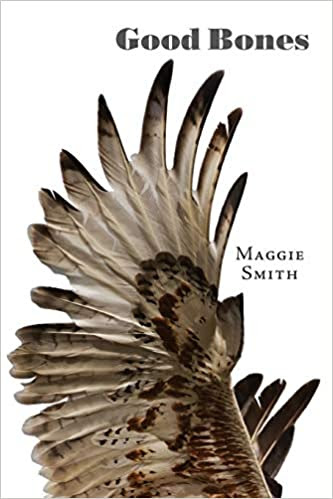
Maggie Smith, Good Bones
(2019): Another new discovery, Smith writes about motherhood and family in this small volume. I especially love the title poem, “Good Bones.”

Elizabeth Barrett Browning, Sonnets from the Portuguese (1850): Another re-visitation of an old favorite. Barrett Browning contrasts in style (using only the strict sonnet form in this collection) to Ryan and Smith, but she was equally a pioneer for her times, and a rebel who broke from a harsh family situation to follow her heart. The love sonnets are still beautiful.

Sunday, April 19, 2020

Choosing life: conversing with wise writers


This time of restriction and isolation has certainly provided more time to read. The introverts among us (myself included) welcome this more than the extroverts do. At times I’m tempted to read for escape and so choose superficial mysteries, spy intrigues, or romances that encourage quick, easy reading. But I find that a week after I’ve finished such a book, I’ve forgotten the characters, the plot, or why I ever read it.
Other times I choose my reading well. Often that means re-reading an old favorite. Currently I’m re-reading Eugene Peterson’s Christ Plays in Ten Thousand Places: A Conversation in Spiritual Theology. I’m reading it very slowly.
The title itself reminds me of how much I love the poetry of Gerard Manley Hopkins. Peterson took his title from Hopkins’ poem, “When kingfishers catch fire.” The poem ends with the lines,
For Christ play in ten thousand places,
Lovely in limbs and lovely in eyes not his
To the Father through the features in men’s faces.
I’m reading the book slowly, heeding the word “conversation” in the subtitle. I frequently pause and in my imagination converse with Eugene Peterson. I ask him how he came up with this metaphor or what path he traveled to come to that insight. I offer my own thoughts. Actually, I develop my own thoughts through the means of this conversation. Often we just sit silently together.
(This shows one way an introvert interacts socially. I’ve always conversed with the authors of books that move and challenge me. In actual flesh-and-blood book discussions, I’m usually the quietest person in the room.)
Right now we’re considering the image of the Holy Spirit “hovering” over the emptiness and chaos at the beginning of creation. It comes in Genesis 1, right before God says, “Let there be light.” The eagle in Deuteronomy 32:11 also “hovers” (same Hebrew word) over the young in his nest. It’s an image of cherishing and hope for life to come. I’m finding (in consultation with Peterson) an image to guide me as I pray over this present darkness and chaos.
Actually, my imaginary conversations with Eugene Peterson have a basis in reality. About 20 years ago I visited my friend Miriam Adeney in Seattle. At the time she was teaching a class on book-writing in Regent University (Vancouver, British Colombia). I spent three days with her as observer and participant in the class.
Across the hall from Miriam’s faculty office at Regent, Eugene Peterson had his office. His book of reflections on the life of David, Leap over a Wall, had just been released. Knowing my admiration for Peterson, Miriam introduced us.
Eugene Peterson graciously invited me into his office for a conversation. Our visit was brief, probably about half-an-hour. I can’t even remember what we talked about. What I do remember is Peterson himself—his attitude of welcome, warmth, curiosity, and attentiveness. For that short visit, he was totally focused on me. His was a pastoral presence in every way. I sense that same presence as I read his books. I suppose it’s a type of gentle hovering.
This book, these conversations, are a way of choosing life today.

Friday, January 3, 2020

Best books read in 2019


This has been one of the best years for good reading. I discovered some new (to me) authors and re-read some old favorites. These are the favorites that I read during the year; most were published in other years.

Fiction
--Richard Powers, The Overstory (2018): Possibly my favorite novel this year, this is the account of the relationships between humans and trees, with the trees being the real protagonists. Nine different stories eventually intertwine as the people share their concerns for the trees of the earth.
--Min Jin Lee, Pachinko (2017): About generations of Korean immigrants into Japan and the racism between the two groups; how the immigrants manage to survive and flourish through their involvement in the casinos (“pachinkos”), although the triumph is bitter-sweet.
--Richard Russo, Bridge of Sighs (2007): In a town in New York state divided by race and social class, three young people from different strata develop a relationship and explore their limitations and possible destinies. How much do family heritage and environment shape lives? Or are humans free to dream and grow?
--Nadia Hashim, When the Moon is Low (2015): A wonderful and difficult book about an Afghani woman and her children trying to escape and migrate to Europe amid incredible hardships. Illuminates and personalizes the refugee crisis.
--Madeline Miller, Circe (2018): Based on Greek mythology, this is the story of Circe, the witch banished to an island who later becomes the lover of Odysseus on his journey home. The characters are quite human in their struggles and joys. I thoroughly enjoyed this book.
--Elizabeth Goudge, The Dean’s Watch (1960): By a favorite “old” author, a story about a friendship between a cathedral dean and a common watchmaker, set in a small English town. Goudge’s wisdom comes through, without a cloying superficial righteousness sometimes seen in Christian fiction. Profound and full of grace.
--Delia Owen, Where the Crawdads Sing (2018): I loved this story of a strange girl who lives alone in the marshes of the North Carolina coast. It brings together the themes of stereotyping people, caring for nature, what it means to be a person, and the serendipities of grace.
--Lois Lowry, The Giver (1990), Gathering Blue (2000), Messenger (2004), and Son (2012): This was my first time through these award-winning young people’s futuristic books. Beautifully written, set in a strange dystopia, they show brave, creative individuals discovering the values that make life worthwhile.
--Barbara Kingsolver, Unsheltered (2018): About two families in two different centuries who occupy the “same” house and find it falling down around them. Both stories are set amid the clashes of science and tradition. As their houses are falling apart, so are their cultures, and both families are facing the possibilities of becoming “unsheltered” on different levels.
--Heather Morris, The Tattooist of Auschwitz (2018): Based on the true story of Lale and Gita Sokolov, two Slovakian Jews who met in the camp of Auschwitz. Well written and moving, but hard to read because of the details of life in the camp.
I read too many good novels to write here about them all. Other authors I read and would recommend include Celeste Ng, Kristin Hannah, Ken Follett, Elizabeth Wingate, Anne Tyler, Liane Moriarty, Barbara Delinsky, and Ocean Vuong.


Non-Fiction
--Nina Willner, Forty Autumns: A Family’s Story of Courage and Survival on Both Sides of the Berlin Wall (2019): A wonderful story, written by the US born daughter of a young woman who escaped from East Germany to make her way in the West. I learned so much about that historical situation, and about the courage to act with integrity in dangerous places, even while measuring the risks.
--Greg Koskela, Finding Hildegard: Healing through Medieval Wisdom (2019): Written by a friend (Friend) who tells about finding a path toward healing from church controversy through the writings of Hildegard. I found much I could identify with, and so experienced a measure of healing myself.
--David Brooks, The Second Mountain: The Quest for a Moral Life (2019): Part memoir, part essay on what it means to be a mature person. Good.
--Francisco Cantu, The Line Becomes a River (2018): Unforgettable memoir by an ex-border patroller along the US/Mexican border. Cantu tried to change the system from the inside, but finally gave up in frustration. A hard, but important story.
--Sonia Sotomayor, My Beloved World (2013): The memoir of her early life, up until the time she became a federal judge. Shows her determination to overcome the odds of her immigrant family upbringing, as well as the influence of family members, friends, and mentors who supported her along the way.

Poetry
I read lots of poetry this year, as usual, but especially enjoyed Jane Kenyon’s collection, Otherwise (1997).

Wednesday, December 11, 2019

New book on Bolivian Quakers!


It’s finally here!

This feels almost like presenting a new baby to the world. Only this one followed six years of hard labor.
Even so, it was a labor of love: love for Bolivian Quakers among whom Hal and I lived and worked for over 30 years; love for the team of Bolivian investigators who accompanied us on this adventure; love for Jesus, the head of the church and the real protagonist of this story.
Love for the country and people of Bolivia also energized this project. Recently, conflicts in Bolivia have been on the news, and many have been praying for peace and reconciliation. The subtitle of the book, “The Story of the Bolivian Friends Church in its Context of Conflict,” illustrates the fact that the recent upheaval, unique in some ways, is actually part of an ongoing drama. Conflict seems to be part of the DNA of this nation’s history, as well as of the Aymara culture among which the Friends Church developed.
A Long Walk, A Gradual Ascent explores how both history and culture affected the development of this evangelical peace church over a period of 100 years.
I found the story fascinating and enlightening. I hope you will, too.

Friday, January 4, 2019

Favorite books of 2018


Of the many books I read last year, these impacted me the most. As usual, this is not a list of books written in 2018, but of the ones I read last year. For some reason, I concentrated more on non-fiction, especially memoir.

Fiction
Michael O’Brien, Sophia House (2005): Set in Warsaw during the Nazi occupation, a bookseller risks all to give refuge to a Jewish boy who proves to be a precocious seeker after truth. Through their long conversations in the dangerous setting, Pawel, the bookseller comes back to his own faith. A moving story.
Jane Kirkpatrick, Emma of Aurora: A Clearing in the Wild (2006), A Tendering in the Storm (2007), A Mending at the Edge (2008): Trilogy based on the real history of a Christian colony from Michigan (on the verge of becoming a sect) moving to Washington and finally to Aurora, Oregon. The story of one woman’s growth into maturity and compassion. Promotes the values and rights of women without being stridently feminist.
Ursula Hegi, Stones from the River (1994): Story of Trudi, a dwarf, in Germany during the rise of Hitler. Small town life of a marginal person, while larger issues surround the village, making many people (a whole race) marginal. As an adolescent, Trudi was molested by some boys her own age (including one who had been her friend), and in anger she throws stones into the river. Later, she uses stones from the river to name people and events in her life and to build an altar. Gradually as she matures, she learns tolerance and forgiveness.

Nadia Hashimi, The Pearl that Broke its Shell (2014): By an Afghani author about the sufferings of women under Islam. The stories of two girls, separated by a century, one the great-great grandmother of the other, interweave. Both suffered under the rule of the men in their lives, both lived for a time disguised as boys, and both found ways of escape. Good writing, important themes, cultural insights.

Non-Fiction
Clodaugh Finn, A Time To Risk All (2017): The sub-title reads, “The incredible untold story of MARY ELMES, the Irish woman who saved children from Nazi concentration camps.” This is a good academic biography that focuses on Elmes’ time in Spain during the Spanish Civil War and in southern France during World War II. It’s an incredible story, but doesn’t go much into Elmes’ personal life, probably because she was such a private person and no personal records remain. She worked for Quakers, but her own commitment to Quakerism is unclear.
Tara Westover, Educated: A Memoir (2018): Amazing memoir about what it means to be poor in the context of a right-wing cult in America. About the role of education in breaking free and coming to live an expanded and full life. Powerful.
Kathleen Norris, The Virgin of Bennington (2001): One of my favorite books this year, this is Norris’ memoir of her college years at Bennington (where she finally lost her virginity as well as her faith, but discovered poetry), and her years in New York working at the Poetry Academy and learning more about the life of a poet, struggling, and finally deciding to leave New York for her grandmother’s ancestral home in North Dakota. Good insights about poetry and poets and mentoring.
Jamie Wright, The Very Worst Missionary: A Memoir or Whatever (2018): Wright’s typical rant against Christian missions, based on her very limited experience as a missionary for two or three years in Costa Rica. She seems to be trying to shock. She’s a skillful writer and an intelligent person, but arrogance may be her downfall. She makes some good points but needs to broaden her experience and read some history. Even so, I enjoyed the book.
J. D. Vance, Hillbilly Elegy: A Memoir of a Family and Culture in Crisis (2016): Excellent and insightful on the situation of the poor white working class in Kentucky, Ohio, etc. Vance reflects on the factors that provided a way out for him, mostly people like his grandparents who genuinely loved him and others who provided a positive example. He talks about his ongoing battles to resist his learned responses to conflict (shouting or escaping). The book illustrates the power of the environment of poverty, but shows that it is not necessarily destiny.

Peter Wohlleben, The Hidden Life of Trees: What They Feel, How They Communicate, Discoveries from a Secret World (2016): One of my favorites this year, this is an excellent non-fiction study by a German tree scientist about the complex underground connections (fungi) between trees in an old growth forest. It deals with the differences between and old growth and planted forests, the slowness of healthy growth, how trees handle disasters—storms, fires, beasts, humans (the worse), how they feed each other, how they share—or don’t share—light, how they migrate when necessary. Much more complex than I ever dreamed.
Bob Woodward, Fear: Trump in the White House (2018): A hard and terrible book to read, but an important one. Woodward carefully documents details of Trump’s behavior, confirming the suspicions I’ve had of a childish, stupid and very dangerous and controlling man. It’s important that this is documented. God have mercy on us and on the whole world.
Douglas Preston, The Lost City of the Monkey God (2017): Non-fiction, story of the discovery of two large pre-Columbian cities in the Honduran rain forests. The difficulties of working in the snake and bug infested atmosphere, the importance of the discoveries (still happening), etc. The book shifted emphasis to the disease of Leishmania braziliensis caused by sand flies, which the author and others on the expedition contracted, with life-threatening and life-long consequences. Discussion as to what caused the sudden demise of the cities, and the effects of diseases, both from the Old and New worlds.
Lisa Ohlen Harris, The Fifth Season (2013): The subtitle is, “A Daughter-in Law’s Memoir of Caregiving.” The events happened in Texas but the author has since moved to Newberg where I live. An excellent book and a compassionate story that doesn’t withhold or gloss over the hard stuff. Well written.

Poetry
Jane Kenyon, Otherwise: New and Selected Poems (1996): I love her poetry and find it accessible, much of it based on the ordinary stuff of life.
James Wright, The Branch Will Not Break (2011) : I love the title and the poem it’s based on, about waking up after a hangover (and more). Others I love include “Trying to Pray,” “Beginning,” and “Lying in a Hammock at William Duffy’s Farm in Pine Island, Minnesota.”
Scott Cairn, Endless Life: Poems of the Mystics (2014): Cairns takes the writings of some of the church Fathers and Mothers (many of them Orthodox, as he is) and turns passages into contemporary poems. Good devotional material.


Friday, December 29, 2017

Favorite books of 2017

I continue to read voraciously, and am always in the middle of some novel. Again, the date 2017 refers to books I read during the year, not to a publication date.

Fiction
Jamie Ford, Hotel on the Corner of Bitter and Sweet (2009): This is one of my two favorite books read this year. It focuses on Japanese citizens in Seattle during the outbreak of World War II and the internment camps that grew up in the northwest. It’s about the relationship between a young white boy and a Japanese girl, how their friendship is affected, and about how they come back together as friends years later. It also shows how relationships within a family can be more complicated and dysfunctional that some cross-cultural relationships. Well written.

David Boling, Guernica (2010): Another contender for the best book I’ve read this year, this is fictional story based on the history of the people of Guernica, the Basque village that was bombed and destroyed by Germans cooperating with Spanish fascists under Franco. It portrays well the Basque culture and its passion to be self-governing. The story circles around three brothers, their relationships and loves, their children and how the atrocities affected them and the rest of the village. The novel even inserts cameo portrayals of Picasso painting the destruction. It also shows how the life of a people cannot be destroyed as rebuilding slowly begins. Good writing, compelling characters, good story. It has an almost fairy-tale-like ending, but I tolerated it because I was ready for something really good to happen to these people.
 Ivan Doig, Dancing at the Rascal Fair (1987) and Prairie Nocturn (2003): I love Doig’s historically based books on the settling of Montana and its subsequent development through the civil war years. Great writing. A fascinating historical background, made real by good characterization and development.
 Charles Williams, War in Heaven (1930) and The Place of the Lion (1933): One of the tests for a good book is the number of times we re-read it. These are two re-reads of my favorite writer of theological thrillers. Williams is a serious theologian, but also a marvelous spinner of fantasy worlds. The result, for an intuitive thinker like myself, is insight and a gripping good adventure. Williams was an intimate friend of C.S. Lewis and J.R.R. Tolkien.
 Elizabeth Goudge, Green Dolphin Street (1944), Pilgrim’s Inn (1948), and The Heart of the Family (1953): I went on a sort of Elizabeth Goudge binge. Her old-fashioned books present virtuous people bringing redemption to difficult situations. This is not as bad as it sounds, due to Goudge’s wisdom and skill in writing. The plots and characters are nuanced and realistic. I always end up being encouraged by the greater Reality than lies beneath the messy stuff I have to live through.

 Ruta Sepetys, Salt to the Sea (2016): Historical fiction from World War II about the transfer of orphans to a ship with a destination in Germany. The ship was overcrowded and went down with losses in the thousands, mostly children. This event was definitely under-reported and is a story that needs to be told. This novel follows the fate of one little orphan girl and is told from her point-of-view. Well written.
 Fredrik Backman, A Man Called Ove (2012): This Swedish novel is about a grumpy old man who is grieving his wife and unsuccessfully (and comically) trying to commit suicide. Meanwhile he relates with his neighbors in unorthodox and obnoxious ways. But something profound and human happens in all these relationships with all these uniquely abnormal people. Love happens, along with acceptance and kindness in unexpected places. Ove never stops being grumpy and obnoxious. But we end up loving him and seeing in him something of what his deceased wife probably saw. Well written. With lots of humor and insight into what it means to be human.
 Tracy Chevalier, Girl with a Pearl Earring (1999): Fascinating fictional account of J. Vermeer’s famous painting, with the girl being represented as a lower-class maid. The complicated family relationships in the Vermeer family are possibly based on fact. It also details class relationships and expectations, with all the injustice these entailed. An interesting look at life in the Netherlands in the 1600s.
 Ken Follett, The Pillars of the Earth (1989): The epic novel of the creation of a cathedral in Medieval England. Not great literature but a good story that kept my interest. Most interesting were the details of Medieval life, politics, marriage, social injustices, as well as, of course, architecture.
 Jane Kirkpatrick, A Sweetness to the Soul (1995): Story of a pioneer woman in Oregon, her positive relationship to the Indians, the tragedies of her childhood, her good marriage to an older man and their adventures. The background is the real-life story of Jane and Joseph Sherar and the building of Sherar House, 1893, as a hotel for travelers who crossed the Deschutes River. I love Oregon stories.

 Molly Gloss, Jump-Off Creek (1989) and The Hearts of Horses (2007): By another good Oregon writer, Gloss’ books certainly don’t present a romantic look at the taming of the West, but the characters are real, as are the hardships they faced. Based on solid research and well written.
 Margaret Atwood, The Handmaid’s Tale (1986): Terrifying, horrifying futuristic tale of life in a dreary time when women are valued only for their reproductive assets, and men are monstrous masters. Seems hopeless, but the human spirit seeps through, demands justice. At the end, a further future audience of scholars is reading the handmaid’s journal, trying to determine the reality of this long-gone culture. This could never really happen. Could it?
 Nafisi Haji, The Sweetness of Tears (2011): A good story about cross cultural understanding (and misunderstanding), the rights of women (or lack of these) in Islamic cultures, the importance of family, and the devastation of war.

Non-Fiction
Trevor Noah, Born a Crime: Stories from a South African Childhood (2016): Memoir by a South African comedian, and another of the best books I’ve read this year. He handles the hardships and challenges of poverty with humor, often hilarity, yet without belittling the difficulties of life on the margins.
 Annette Gordon-Reed, The Hemingses of Monticello (2008): A view of the family of Thomas Jefferson’s slave mistress, Sally Hemings. While Jefferson treated members of this family with kindness (and may have loved Sally), they were still slaves. A fascinating inside view of slavery at the end of the 18th and beginning of the 19th centuries, documenting the hypocrisy and inhumaneness at the heart of it all.
 Rachel Held Evans, Searching for Sunday: Loving, Leaving and Finding the Church (2015): The honest yet compassionate story of Held Evans’ disillusionment with the institutional church, and the search that led her back to a commitment to being part of the people of God. I got a little tired of her theological comments and tended to scan these, but the narrative part of the book, its heart, is fascinating, containing much I could identify with.

 Eugene H. Peterson, As Kingfishers Catch Fire: A Conversation on the Ways of God Formed by the Words of God (2017): I usually love Peterson’s books, and this latest one did not disappoint me. It’s actually a collection of sermons he preached years ago as pastor of Christ Our King Presbyterian Church in Bel Air, Maryland. The insights from Scripture are rich and I find many new perspectives to think about and to live out. This is a book I plan to periodically re-visit.

Saturday, December 31, 2016

Favorite books read in 2016

I can lose myself in a book, but, better than that, I can also find myself. This is the list of my favorite books read during 2016, whatever year they were published in. A few of them fall in the finding-myself category.

Fiction
Elizabeth Goudge, The Bird in the Tree (1940): An old book by a favorite author. The protagonist is an grandmother, and the plot circles around family and difficult choices of the younger generations. Goudge’s writing is thick with description of the land, the birds, the forest, and the people, and rich in insights about human nature. Definitely old-fashioned but worth reading again.
Oliver Potzsch, The Hangman’s Daughter (2010): A grim but fascinating historical novel, based on the author’s ancestor who was the hangman (torturer of confessions, executioner) in a medieval German village.
Anthony Doerr, All the Light We Cannot See (2015): One of my favorites, this amazing and beautiful story is set in World War II, on Saint Malo, a city island off the coast of France that was destroyed by the Germans toward the end of the war. The story follows the lives of two children, a blind girl in France and an orphan boy from a stark mining town in Germany. Both have minds awake and a hunger to learn. Their lives come together on the island. The book stokes the fires of longing for kindness, grace, and all the light we cannot see.
Emily St. John Mandel, Station Eleven (2014): A well-written futuristic fantasy of the survivors of a pandemic flu that kills 99% of the earth’s population. The story weaves back and forth in time, following the lives of several protagonists who eventually come together to build a new civilization.
Ruta Sepetys, Between Shades of Gray (2011): A young adult novel about a 15-year-old Lithuanian girl in 1941, at the time of the Soviet take-over of the Baltic countries. The author draws from stories of her own family members. It shows the courage of the human spirit at its best, human cruelty at its worst, and always hope, like the line of sun on the horizon after the long Artic winter, showing between shades of gray.
David Wroblewski, The Story of Edgar Sawtelle (2008): A remarkable about a mute boy on a Wisconsin farm and a family that raises and trains dogs. A coming-of-age story involving an escape from home and a return to face old tragedies.
Kate Atkinson, Life After Life (2013): A strange but compelling novel that explores the possibility of returning to life, after death, to try to “get it right.” The book sashays back and forth in time from Ursula’s birth in 1910 where in her first life she dies shortly after birth. Each section takes her on to her death, occurring at a different point in her life. What stood out to me were the small decisions and incidents that made all the difference, the gravity of the seemingly insignificant.
Carol Shields, Unless (2002): The protagonist is a writer struggling with her second novel and the real life trauma of her homeless non-responsive daughter. The chapter titles are all connecting words or phrases such as “unless,” “although,” “not yet,” “thus,” and so on, giving the idea of being somewhere in the middle, neither subject nor predicate, a person on hold from life. Beautifully written, clever observation of detail, stimulating reflections.

Non-Fiction
Scot McKnight, The Blue Parakeet (2008): Helpful book about hermeneutics, taking into account how we all pick and choose what we ignore in the Bible. Gives criteria for reading the Bible in its original context and interpreting it into our contexts. Especially encourages careful consideration of “blue parakeets,” those troublesome passages we normally try to overlook—about women, war, sexuality, etc.” Could be helpful to NWYM at this time.

Hali Felt, Soundings: The Story of the Remarkable Woman Who Mapped the Ocean Floor (2012): story of Marie Tharp who fought the odds as a woman to be an oceanographer. I’d never heard of her before. Between 1950 and into the 1970s, she mapped the entire ocean floor and in that process discovered the rift valley that circles the globe, today known as the Mid-Oceanic Rift.
William L. DeArteaga, Agnes Sanford and her Companions (2015): The subtitle is, “The Assault on Cessationism and the Coming of the Charismatic Renewal.” Fascinating history of one of the most important, and unrecognizeed, theologians of the 20th Century. She is one who brought healing back to the church. Her work was formative for Hal and me as we started out on our adventures as cross-cultural servants of the Kingdom.
Eric Metaxas, Seven Women and the Secret of Their Greatness (2013): Brief biographies of Joan of Arc, Susanna Wesley, Hannah More, Saint Maria of Paris, Corrie ten Boom, Rosa Parks and Mother Teresa. Inspiring and informative. I seem to have focused on biographies of women this year.
Marie Kondo, The Life-Changing Magic of Tidying Up (2014): Hal and I enjoyed reading this as an exercise in cross-cultural perspectives, noting all the worldview issues coming from an Eastern culture with an animistic background (although the author is a modern urbanite). We chuckled at the idea of rolling up your socks in such a way that they sense your gratitude for all they do for your feet...and so on. But I also found the book helpful and encouraging as we faced the ongoing tasks of decluttering and organizing.
Dallas Willard, Hearing God: Developing A Conversational Relationship with God (1984, 1999): This is a book I plan to regularly re-read. It encourages me in my relationship of intimacy with God.
Esther: I read the biblical book of Esther in November and found it helpful as I looked back on the whole election year, and now, as I wrestle with the results of the election and the future of our nation. The story of a capricious, foolish, impulsive, rich, immoral but powerful political leader and the resulting precarious position of the people in his realm gives me courage. The book gives insight about how to be the people of God in such a situation.

Poetry
Margaret Rozga, Justice Freedom Herbs (2015): Rozga’s poetic reflections on the social justice battles of the 60s awaken my own memories and feelings from that era. And the struggle continues. I’m glad some of the “warriors” are also poets and gardners.
T. S. Elliot: Four Quartets (1943): I continue basking in the beauty of Elliot’s language, only intuitively grasping his meaning. Little by little.

Arthur O. Roberts, Prayers at Twilight (2003): Since Arthur’s death, I find these imaginative reflections on heaven poignant. More questions and ponderings than actual reflections, of course, Arthur knows the answers now.  

Wednesday, December 30, 2015

Favorite Books of 2015

Right now the suitcases are out, and piles of this-and-that cover the floor. Early tomorrow morning we board the plane for our flight to Bolivia and two months of field work on the history project. An important part of our preparation is making sure our Kindle is loaded up with enough good books to sustain us while we’re away.
Which reminds me, of course, of some of the great books I’ve read this year. I’ve had to pick and choose for this list. Again, it’s not a list of good books published in 2015, but a list of what I especially appreciated of the books I read during the year, whenever they were published.

Fiction:
--Sue Monk Kidd, The Invention of Wings (2014): Based on the history of the Grimké sisters, abolitionists and fighters for women’s rights in the early 1800s. Also part of Quaker history. The heart of the story is the relationship between Sarah Grimké, a slave-owner’s daughter, and Handful, her personal slave.
--Marilynn Robinson, Home (2013) and Lila (2014): These follow Gilead and each focuses on one of the characters who live in the small town of Gilead. Beautifully written. Themes are home and family, grace, sin, repentance, forgiveness, and the possibility of transformation.
--Jenna Blume, Those Who Save Us (2004): A holocaust novel about baring the burden of a hidden story and how the revelation brings forgiveness and grace between generations.
--Dorothy Sayers, Clouds of Witnesses and Whose Body?: I love Lord Peter Wimsey! Once again intelligence and intuition combine to solve the crime. A favorite quote from Clouds has Lord Peter reflecting on his mother: “Time and trouble will tame an advanced young woman, but an advanced old woman is uncontrollable by any earthly force.”
--William Kent Krueger, Ordinary Grace (2014): From the point of view of a 13 year-old boy reflecting on the tragedies in his family. Themes include war and violence, marginalization, and friendship, but once again grace and forgiveness have the final word.
--Ruchama King Feuerman, In the Countyard of the Kabbalist (2013): Fascinating story of the unlikely friendships between an intellectual New Yok Jew, a firey Jewish woman in Jerusalem, a Kabbalist, and a poor Muslim worker, all involved in the discovery of an ancient relics site near the Dome of the Rock and the question of who owns it. “If I tell you my story, you will listen for awhile and then you will fall asleep. But if, as I tell you my story, you begin to hear your story, you will wake up.”  “Nobody knows who he is until he tells his story to God….”
--Helen Simonson, Major Pettigrew’s Last Stand (2011): Good romance about two older people who refuse to be limited by other peoples’ (including their own children) concepts about what’s good and proper at their age.
--Anne Tyler, Dinner at the Homesick RestaurantI (1996), Back When We Were Grown-ups (2001), and Digging to America (2007): I keep coming back to Anne Tyler’s novels.
--Darragh McKeon, All that Is Solid Melts into Air (2014): Fascinating story about different people affected by the Chernobyl disaster in 1986. Brings in the tragic and heart-breaking human factor.
--Jacqueline Winspear, Maisie Dobbs (2003), Birds of a Feather (2004), and Pardonable Lies (2005): Another woman detective with wit and humor, a British version of Botswana’s Mma Ramotswe (who is actually herself a British version of an African detective). This has been the year of British detective novels!

Non-Fiction:
--Lamin Sanneh, Called from the Margin: Homecoming of an African (2012): More of an accounting of the development of his thought than of his life experiences. I loved the section on his Muslim childhood and conversion to Christianity without being “evangelized,” his rejection by Christians, his encounters with the West and his eventual conversion to Catholicism. He brings together the pieces of his life, staying African, yet finding his true home in Christianity.
--Dominika Drey, The Twelve Little Cakes (2006): Memoir of growing up in communist Prague, the child of dissidents. Chronicles the joys of childhood in spite of the oppressions surrounding the family. “The system was unfair but the human spirit triumphed on a daily basis….”
--Joahua Wolf Shenk, Lincoln’s Melancholy: How Depression Challenged a President and Fueled His Greatness (2005): Excellent and well documented study of Lincoln’s depressions, set in the context of contemporary perceptions of mental health and its treatment. I was interested that two ways Lincoln coped with his predisposition to depression were humor and poetry.
--Leanne Payne, Heaven’s Calling: A Memoir of One Soul’s Steep Ascent (2008): Her awakening to a healing ministry, through experiences, relationships, experimentation.
--Katherine Patterson, Stories of My Life (2014): I love reading the memoirs of writers I love, and Patterson’s book did not disappoint. Her early experiences in China and Japan, daughter and then wife of missionaries, and the struggles with adaption to life in the West certainly enriched her spirit and, consequently, her writing.
--Phillip Yancey, Prayer: Does It Make Any Difference? (2006): This was a re-read of a book I need to re-read every year. Very insightful and motivating and I try to learn to pray in ways that might make a difference.
--Joy of Zentangle: Drawing Your Way to Increased Creativity, Focus, and Well-Being: Putting aside the hype of the title, zentangle is so much fun! The “Joy” part of the title is correct.

Poetry:
--William Jolliff, Twisted Shapes of Light (2015): Possibly my favorite book of the year, a collection written by a friend and Friend, bringing together memories of life on a farm, family, and growing up in a fundamentalist church. Bill should be more famous than he is.
--Billy Collins, Aimless Love—New and Selected Poems (2013): I love how Collins uses humor to do social criticism and explore reality and relationships.
--T.S. Elliot, Four Quartets (1943): I love this book, even though I can’t say I totally understand it. I love the language, and how Elliot plays with time and eternity. I’ve been reading it over and over, sort of rolling around in the words.


I would love to hear about the books that touched or challenged you in 2015.