The Three Bald Monks
in the window
have journeyed from Uruguay
to daily direct my devotions.
Sebastian the beggar
with shaggy brows
and irresistible stare
implores my generosity.
Alfonso the chanter
whistles the Psalms while
Thaddeus kisses the cross
in semi-swoon.
They remind me
to take up my given cross
abide in the word
shelter under the mercy
wear sturdy shoes
and never worry
about wardrobe
or weight.
Showing posts with label spirituality. Show all posts
Friday, February 5, 2021
The Three Bald Monks
Tuesday, November 14, 2017
Surviving the Hobbit Hole
I have a fantasy about being part of the persecuted church. I am captured for my faith and put into a dark dank little room and left there to suffer in solitude. But, in my imagination, I pray. I sense the presence of Jesus and meditate on his beauty. My circumstances become irrelevant as the glory overwhelms me. The divine beauty lifts me up.
Maybe it’s good
to put such positive pictures in my head. But every now and then reality
marches in and knocks them out.
Our current reality
is called “The Hobbit Hole.” Hal and I gave it that name in order to inject a
bit of humor into our living situation.
Several years
ago, the executive council of the Friends Church here in La Paz fixed up this
little apartment for us. It had been the office of the Bible school staff and
when they relocated, the council painted it a peach color, put in a ply-wood
partition and a miniscule kitchen counter and sink, and invited us to live here
during our yearly visits to Bolivia. It was a loving gesture and we receive it
in that spirit. It’s conveniently located near the office of the history
commission we’re a part of, and right in the hub of activity of the Bolivian
Friends Church headquarters. Moreover, it comes with its own small but private
bathroom.
We’re grateful.
And yet….
People here have
their own nickname for this space. They call it “The Refrigerator.” Truth be
told, it’s small, dark, cold, and ugly. When we first moved in, we referred to
it as “The Cave,” but later opted for the more positive “Hobbit Hole.” The
peach-colored walls help.
The apartment
does have one large window—that looks four feet out onto the unfinished brick
wall of the church. Not one beam of sunlight dares to enter. Ever.
Our “Hole” is
located on the lower level of the large Friends school in back of the main
church. Above us is a primary classroom, and from 7:30 a.m. to 6:30 p.m., the
kids shuffle, stomp, recite in unison and scrap their desks across the floor.
In the time between the morning and the afternoon shifts, rascally little boys
and girls run up to our door, bang on it, and run away giggling. We choose to
see the humor in all of this.
But at night, the
place is dark and silent. Sleep is sweet.
So, we ask
ourselves, “How do we choose life in this particular situation?” There is much
we can do. Rugs help warm up the floors (tile over cement), as does the small
but efficient space heater. We’ve brought in trees, mountains, flowers and even
two affectionate giraffes with calendar photos on our partition. Pictures by our artistic granddaughter, Gwen,
add both joy and beauty. We try hard to keep things neat and orderly. Our table
serves as a center for study, meals and hospitality. Yes, people do visit us
here. We have seating for five if we bring in the stools that serve as our
bedside tables. If more show up, some of us stand. It tends to keep visits
short.
Living room/dining room/office
Thank you, Gwen!
A place to fix simple meals
But I have to
admit that my surroundings do affect my spirit. There are days when I fight
depression, when the lack of sunlight and the sheer smallness of this space begin
to give me a spiritual claustrophobia. I fight the temptation to give in, but
this takes its toll on my energy level.
So we make an
effort to get outside every day, to visit our friends around the city, to
program adventures that let us see real trees and flowers growing out of the
ground.
And in the early
mornings, as I wait before the Lord, there are times when his beauty becomes
more real than anything else, and glory fills even the Hobbit Hole.
For all the other
times, “Lord Jesus Christ, have mercy on me.”
Amen.
Thursday, June 29, 2017
Declaration of Independence, Interdependence and Total Dependence
Since the first shall be last and
the last first, I’ll start with Total Dependence.
Declaration of Total Dependence
--I declare my total dependence on
God. I want to say with the psalmist, “Whom have I in heaven but you, and on
earth there is no one I desire who compares with you.” “In God I live and move and have my being.”
God alone is my source of glory (recognition, acknowledgment, and the
fulfillment of my longings for beauty, love and belonging). God is my glory and
the lifter of my head. Jesus is my companion on the road, my resting place, my
home. The Spirit in me is the fulfillment of my dearest dreams. I live to love,
praise, honor, rejoice in and glorify my Lord. “Praise to you, Lord Jesus
Christ, King of endless glory.”
Declaration of Interdependence
--Thank you God for providing me
with a human companion on the road. Thank you for Hal, my best friend, my
lover, my colleague in work, my prayer partner, my peer mentor, someone to
laugh at my jokes and understand my tears, the human being I love above all
else in ways that are ever changing. What a life you’ve called us to and what a
joy now to be able to grow old together. We do depend on one another. In our
case, two definitely are better than one. We walk forward hand in hand to the
dawn of a perfect day.
Declaration of Independence
--In terms of the beautiful
children and grandchildren you’ve given us, we declare our ongoing love and, at
the same time, our independence. I’ve raised my children to be independent
mature persons, and now they are passing it on to their children. I release
you, dear ones. More than that, I not only get to rejoice in your independence
from me, I get to declare my own independence. I will always love you, but I do
not need you to keep needing me. I am even becoming free of any need for your
approval. While I am still parent and grandparent, the roles have changed. I am
free to be who I am with you and to go beyond the role. I don’t have to be “Super
Grandma” or “Ancient Wise One” or “Whatever.” I can let the roles mature and
meet you face to face.
Independent, yet interdependent.
All of us together dependent on our Lord and the creator of all this joy. So
help me, God.
Monday, May 15, 2017
Devotional chocolate and Mother's Day
Yesterday my
grandchildren prepared a Mother’s Day tea and invited their two grandmothers and,
of course, their mother. We grandmothers received flowers but the kids
presented their mother with a bar of Super Dark Matcha Chocolate. Very gourmet
and very appropriate. My daughter-in-law, Debby, is currently drinking matcha
tea every day and expounding its merits. The spirulina algae it contains helps
make it super-healthy.
The packaging contained
instructions on how to taste “an exotic chocolate bar,” and as a party activity,
granddaughter Gwen read the instructions while we all attempted to have the
ultimate chocolate experience. It was great fun, and the chocolate was quite
good.
The kind of
language used in the packaging of this product either angers or amuses me. In
this case, the instructions, the information about the creator of this chocolate
bar (a woman named Katrina) and her hopes for the effects it will produce are
obviously meant to be taken seriously. It sounds like a new-age spirituality of
chocolate.
I asked Debby to
loan me the package, told her I was sure I could find a poem hidden in all the verbiage.
And so I did. A “found
poem” (a real genre, by the way) lifts words and phrases from a text and
rearranges them into a poem which, in many cases, plays around with the meaning
of the original. I was definitely playing. But, at the same time, while this
found poem may seem totally whimsical, it is actually serious literary/cultural
criticism.
Please keep that
in mind as you read.
Chocolate Devotions
Katrina, the medium of chocolate,
invites you to follow
as she travels the world
in search of a superior source.
Are you ready?
Take three deep breaths,
smell,
taste, and….
SNAP!
You will hear a crisp ringing pop
as your mind and spirit
open to new ideas.
Even though you have only
rubbed your thumb on the surface
of the chocolate experience,
a meticulous process has begun.
Your inner spices, nuts, roots,
herbs and liqueurs will be ground
by low friction, then fused
to bring you to the pinnacle
of your taste profile, thus
enabling you to harness
the power of storytelling.
Can you believe it?
At the end of the day,
if you have followed Katrina’s instructions,
you will have
an exotic chocolate movement,
thus releasing you
to enter the super dark
where spirulina algae
will swim through your dreams
spreading peace, love, and, as ever,
chocolate.
invites you to follow
as she travels the world
in search of a superior source.
Are you ready?
Take three deep breaths,
smell,
taste, and….
SNAP!
You will hear a crisp ringing pop
as your mind and spirit
open to new ideas.
Even though you have only
rubbed your thumb on the surface
of the chocolate experience,
a meticulous process has begun.
Your inner spices, nuts, roots,
herbs and liqueurs will be ground
by low friction, then fused
to bring you to the pinnacle
of your taste profile, thus
enabling you to harness
the power of storytelling.
Can you believe it?
At the end of the day,
if you have followed Katrina’s instructions,
you will have
an exotic chocolate movement,
thus releasing you
to enter the super dark
where spirulina algae
will swim through your dreams
spreading peace, love, and, as ever,
chocolate.
Celebrating Mother's Day with granddaughter Alandra
Labels: Writing
chocolate,
family,
humor,
poetry,
spirituality
Monday, July 11, 2016
Eye contact
My eight-year-old
grandson, Peter, has autism. He is bright, creative, quirky and full of
surprises. He attended second grade in a public school this year, and he
proudly tells people he is now in the third grade.
The end of the
year assignment in his second grade class was a public speech. Each student was
to introduce him or herself in three minutes. They could use a manuscript.
Peter is one of
those chosen children who actually love to write. He wants to be a writer when
he grows up and has already written and illustrated over 20 “books.” So producing
the manuscript for the speech offered no problem.
The difficulty
came with the other guidelines, chief among which was eye contact. Peter was
supposed to look around at people as he spoke. He was instructed to make
contact with his audience of second grade peers. He would be graded on this.
Eye contact has
been problematic for Peter since infancy; it’s part of autism. He’s actually
done quite well and has learned to occasionally look people in the eye as he
speaks with them. He’s gotten used to us saying, “Peter, look at me.” But it’s
never become quite natural.
And he doesn’t
multitask. Give him a job to do, with clear instructions, and he can pour
himself into it with passion. Thus, the more than 20 “books,” and the boxes of
art work. But giving a speech and making eye contact with an audience are two separate
tasks for him, and one task too many for it to be easy or natural.
But Peter
determined to get it right, so he and his mom came up with a plan. Kristin, my
daughter, penciled dots in his manuscript, one after each two sentences. The dot
was a clue for Peter to lower his manuscript and look at someone in the audience.
They decided on 5 seconds as a good amount of time for the look. Then they
practiced. And Kristin videoed the practices on her phone so they could learn
from them.
That seems like a
lot of work for the second grade.
Peter is also
visually impaired, so he had to hold the manuscript close, right in front of
his face. Although he had the speech memorized, he wanted to do it this way.
After all, the teacher said to use the manuscript.
So, face well hidden,
he stood and began to loudly, clearly read the introduction. Then, briskly he
lowered his arms and stared straight ahead, in this case at Kristin. When Peter
stares, it’s serious. It’s fierce, concentrated and without the blink of an
eye. As I watched the video, I could imagine him mentally counting to five.
Then up went the manuscript and he loudly read the next two sentences. He reminded
me of a robot as he again lowered the manuscript, shifted his head to stare at
another person for five fierce seconds. Then up again for the next part. Repeat,
repeat, repeat, right to the end. Kristin admirably harnessed her temptation to
laugh.
As I said, he was
determined to get it right.
And he must have
done so, because he passed into the third grade.
Maybe the end
product wasn’t quite natural, but I admire his determination and perseverance.
I pray that life, mainly other people, will be kind to Peter--whether he avoids
eye contact with them, or stares with ferocity. And I pray they listen to what
he has to say.
In the early
morning hours, I try to make eye contact with God. I confess that it is neither
natural nor easy. Sometimes I use guidelines developed by others who’ve learned
to do it well. Under their instructions, I may practice a certain number of
seconds of concentrated gazing at the light. Then down again for a quick dip in
the Scriptures. Up again to gaze (or meditate, if that’s the right word).
Repeat, repeat.
I wonder if I look
to God a bit like Peter. I wonder if I have some form of spiritual autism.
At any rate, I
sense great patience and kindness coming to me from God’s heart.
And, yes, an occasional
chuckle.
Tuesday, May 31, 2016
Awful grace
Our gathering word
in unprogrammed worship on Sunday came from the ancient Greeks. Aeschylus
wrote, “He who learns must suffer, and, even in our sleep, pain that cannot
forget falls drop by drop upon the heart, and in our own despair, against our
will, comes wisdom to us by the awful grace of God.”
In the silence, I
wrote two questions in my notebook: 1) Is suffering an inevitable ingredient of
the kind of learning that leads to wisdom? And, 2) Is wisdom the inevitable
result of suffering?
I think the answer
to both questions is “no.”
Life testifies
that suffering can, indeed, result in wisdom. But delight and great joy also
provide a path for learning. As a young person preparing for a career in
teaching, I memorized a paraphrase of one of Solomon’s proverbs: “A wise
teacher makes learning a joy.” That became my aim (if not always my reality) as
a high school teacher.
As to the second
question—Is wisdom the inevitable result of suffering?—I observe that while suffering
can lead to wisdom, it sometimes ends up as bitterness.
Maybe it depends
on the attitude of the sufferer.
Maybe it depends
on the awful grace of God.
Lord, have
mercy on me, a sinner. Let my sufferings today, large and small, lead to
wisdom. Make me tender, not witty. Amen.
Tuesday, August 18, 2015
On being a liver
Peter, age 7, and Paige, 10, were playing Legos in my living room, while I sat on the couch pretending to read, but really listening to them build their imaginary world.
At one point Paige lifted her Lego
horse and as it leaped the castle wall, she asked Peter, “Can your Lego guys do
this?”
“No,” Peter responded. “Me and Tim
don’t do stuff like that. We’re livers.”
Paige cocked her head and gave him
that “you’re-crazy” look. “What?”
“Livers.” Peter insisted. “That
means we’re normal guys. We don’t do stuff. We just live.”
I smiled and kept quiet. I
connected their conversation with the old Martha/Mary division and the
differences between people. Some people are do-ers, workers, those who
accomplish great—or not-so-great—things for the kingdom. They “work for the
night is coming,” knowing that “their labors are not in vain.” Others prefer to
sit at the feet of the Master, meditate, pray and just be. They focus on “abiding
in the vine.”
This division is, of course,
superficial. Most of us move back and forth on a continuum between doing stuff
and quietly being present. While we may tend to one side, we’re both types, depending
on circumstance and opportunity.
I’m a poet. The noun “poem” comes
from the Greek “poema,” and its verb form means, ironically, “to do” or “to
make.” The particular making that a poet engages in results, sometimes, in a work of art.
Work is on the doing-stuff side, but art leans toward the livers of the world.
The combination, “work of art,” brings them together in synchronicity.
This is beginning to sound as
silly as my grandkids’ conversation.
At any rate, I’ve added a new
meaning to an old word. I’ve got lots of stuff to do today, but I will take the
time to remember that I’m basically just a liver.
Paige the do-er and Peter the liver
Thursday, January 29, 2015
Room with(out) a view
But, for the most part, the work
is tedious. Stacks of old minutes and letters to go through. Days when we work
alone and make no enlightening discoveries. Rainy days. Days without poetry.
Part of the struggle is the place
we live in. This place is also part of our joy, and something to thank God for.
But some days I have to remind myself to
be thankful.
The INELA (Bolivian Friends
Church) has provided us with a small room on the property that also houses
yearly meeting headquarters, the large urban Friends Church, and the Friends
grade and high schools. Our place includes a small private bathroom, a tiny
kitchen unit, a place to sleep and a table to use for meals and study. It meets
most of our basic human needs and is close to the history project office. We
pay a minimal rent to the yearly meeting and this is, indeed, a help to them,
as well as a way to economize for us. There is much to be thankful for.
But one of my “requirements” for
anyplace I live in is a room with a view. And a way for sunlight to enter, at
least part of the day. At home in Newberg, our little condo is blessed by a
large maple tree that fills the bedroom and office windows with green beauty,
and fleshes out the changes of the seasons. From the other rooms I look over
rooftops to distant trees and hills. It’s not spectacular but it’s enough.
Here in La Paz, our little room is
tucked between and under other buildings. The one large window looks out to the
brick wall five feet away. Not one ray of sun dares enter. Ever.
We originally called our home,
“The Cave,” but we’ve changed the name to “The Hobbit Hole,” in an effort to
keep positive. People here refer to it as “The Refrigerator.” The floors and
walls of cement seem to radiate the cold of this high Andean climate.
“But,” I tell myself, “I have a
clean private bathroom.” Would I trade that for a view? Probably not.
The electric space heater is
gradually making it less of a refrigerator. In fact, people stepping in now
notice right off how cozy it feels. A few scattered rugs make their
contribution. We purchased a good bed, so we sleep well. And some kind person
anonymously gave an offering designated for the purchase of a small literal refrigerator
(without even knowing the nickname given to this space). All this increases our
ability to live in some comfort and that helps us get our work done.
But still—the view? My need for
beauty and light?
One thing I’ve done to try and
supply a view is cover the walls with photographs of the Pacific Northwest.
Actually, these are old calendar pictures. I can’t throw away any beautiful
picture, so I dug through my collection before we traveled and brought with me
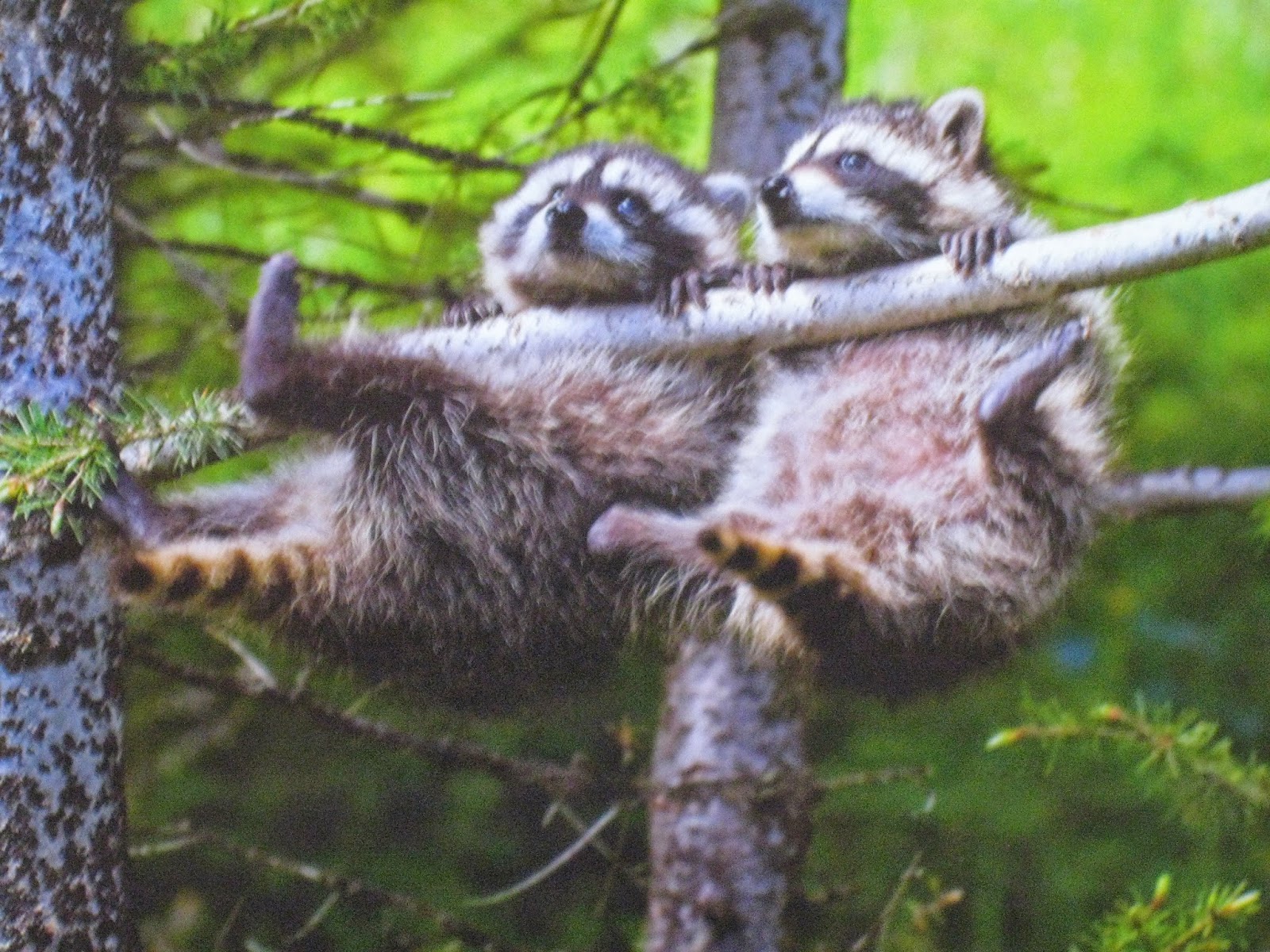
about 20 views of ocean, forest, stream, waterfall, flowers and two pesky
raccoons precariously hanging from a branch. These now adorn the wooden
partition that separates the sleeping and working areas of our room. My friend
Catherine hand-lettered some words from Scripture, and these also encourage us.
The books I’ve loaded on my Kindle
include a selection of poetry—a volume each of Mary Oliver, Wendell Berry,
Billy Collins and Yevgeny Yevtushenko. These always open windows and let in
strange and lovely views.
My key strategy is spiritual. I’m
asking God’s help to let this be a season when I behold him in his beauty,
regardless of my surroundings. He is Light and beauty and goodness, all the
view I need.
To live in this Reality is my
ideal and my deep desire. And I have now the perfect opportunity to experience
this.
I wish I could say that it’s
actually happening, that my spirit is soaring in all the spiritual beauty and
light available in Jesus.
However, I’m very human, and
yesterday, for example, cabin fever was raging. I felt restless and homesick,
wanting to be in my own room, looking through the lovely bones of my maple tree
to the houses across the street. I even counted the days until we can fly back
to Oregon.
But this morning I woke up,
renewed in hope and thanking Jesus for his gracious presence in my life and my
present circumstances, including this Hobbit Hole. So day by day, I walk
forward.
I think it’s actually getting
lighter in here.
Labels: Writing
Bolivian Friends history,
place,
spirituality
Saturday, May 17, 2014
On being a lower-case "l" listener
Tomorrow I launch out in a new adventure. I get to be the “Listener” at the Leadership Institute for Group Discernment, held at Camp Tilikum outside of Newberg. For four days and nights, 27 Christians from around the country will gather to listen to each other and God, and try to come closer to an understanding of what it means to be the people of a God who walks with us and talks with us.
Early this year, the director of
the Institute invited me to be the Listener for this particular gathering. This
was my first encounter with that term, and I noted that the “L” was upper-case.
Not listener, but Listener. The director, also my friend, Jan, described the
role in her invitation: “This person immerses himself/herself in all of
the conference--and then presents on Thursday morning as a summation of our
time together. We expect the Listener to bring forth themes that seem to
be important, to add or highlight things that the Spirit has been working in
the Listener, to weave together the textures of the gathering, etc.”
After my initial delight at being invited, the
doubts began rolling in. Was this really something I could do? Since this is a
common pattern upon receiving an invitation—enthusiasm followed by fear—I knew
that I should sit with the possibility, talk it over with Hal, pray and wait
for the Spirit’s nudge. Hal pointed out that the fact that I regularly wait for
the Spirit’s nudge, and usually recognize it when it comes, indicated I might
be able to fulfill the role. So I accepted the invitation, partly because I
want to be the kind of person who can listen like that and who can lead other
people in community listening. But I suspect that I’m still at the stage of
being a lower-case listener, rather than a Listener. There’s lots of room for
growth.
And growth is one thing I pray for in this conference—for
me and for all of us as a gathered community.
I’m very aware that listening for God’s voice
in a group of human beings is not easy or automatic. I’m recognizing the
context of my real life that I will be bringing with me to the conference.
Currently I’m in the middle of several community discernment processes, one of
which is difficult but going well, and one of which can only be described as an
agonizing struggle. At the heart of both processes is the desire to discern
what God is saying.
One of the riskiest aspects of this assignment
is that I make a presentation to the group on the last morning of the
conference, and I have a whole hour in which to do it. But I can’t prepare. My
slate is blank, which is way beyond what I’m comfortable with. (Don’t criticize
that last sentence, please. I strongly affirm that you can so end a
sentence with a preposition! But that’s another subject.)
Actually, my slate is not blank. And I am
preparing. The very life situations I bring with me are an important part of
the slate. Writing this blog is preparation, as is the prayer that precedes it.
And for some reason, I’m not afraid. I’m looking forward to what God will say,
through us and to us. I sense the Spirit faithfully making me into a listener.
Maybe someday I’ll even be an upper-case
Listener. Maybe I won’t. It’s not mine to worry about.
(Did you catch that other frisky
preposition that I just ended another sentence with?)
Labels: Writing
discernment,
listening,
Quakers,
spirituality
Saturday, April 26, 2014
A child's take on the Trinity
Several years ago our grandson came
home from Sunday school with some questions on his mind. He said to his mom,
our daughter, “I don’t get this stuff about the Father, the Son and Andy.”
“Who?” Kristin responded. “Who’s
Andy?”
“That’s what I’m asking you,”
Reilly pointed out.
Kristin tried unsuccessfully to
get more clues out of Reilly, and finally succeeded later in the week when she
overheard him singing one of the old hymns of the church, part of the Sunday school’s
program to teach kids the basics of the Christian faith. He was singing, “In
the Garden,” and the chorus of his version was, “Andy walks with me, Andy talks
with me, Andy tells me I am his own….”
Reilly had apparently used
six-year-old logic to come up with the names of the Trinity. The Father and Son
were concepts he could at least relate to, and he knew their names: God and
Jesus. But Spirit is a more elusive concept for a child, so he figured that
must be the one called Andy. It still didn’t make much sense.
It reminds me of the story of the
Japanese gentleman who was trying to understand Christianity. He remarked to
his American friend, “Honorable Father I understand; Honorable Son I
understand; Honorable Bird I do not understand.”
Many of us struggle to understand
Honorable Bird. The concepts of the Trinity and its most mysterious member, the
Holy Spirit, don’t fit easily in the brain. And the Bible doesn’t give us clear
logical definitions.
It does, however, give us images
and stories, and that’s where I begin to see “with my eyes of my heart.” Images
such as breath of God, wind, still small voice, flowing water, and the picture
of the Spirit hovering over the dark chaos in the beginning of time, waiting
for the Father to whisper, “Light”—these draw me to the third person of the Trinity more than any doctrinal statements could do. Intuitively, I begin to
understand.
Reilly got part of the picture
right. Children frequently do. The Holy Spirit seems to be that aspect of God
that “walks with us and talks with us and tells us we are his own.”
And whatever we call him (or her),
including Andy the Honorable Bird, or the Holy Ghost, the Spirit personally draws
us into the presence and reality of God. Then words and labels and definitions cease
to matter. Life touches Life and we walk free as a child in the winds of grace.
Friday, March 7, 2014
The lament of a failed contemplative
Despite my earnest desire to enter
into the contemplative experience—to lose myself in the presence of God—I just
can’t seem to get it right. I suspect that I am spiritually ADHD (attention deficiency
mixed with hyperactivity), although to many people I appear calm and even wise on
the outside.
It’s not that I haven’t tried. I’ve
been trying for years, doing the breathing exercises, choosing and saying a “prayer
word” (which is never “om”), arranging the atmosphere, lighting the candle,
etc. And sometimes it does, indeed, work. Sometimes, many times actually, I
sense the sweet presence of Jesus, to the point of tears and shivers. But it
only lasts for a short time, and I’m talking seconds, not even minutes.
Recently I had a conversation with
three good friends about Quaker mysticism, and I claimed to be one. A Quaker
mystic. My friends wisely observed that I probably wasn’t, at least not yet.
The more I think back on that conversation, the more I think they’re possibly
right. Although I still wrestle with the question of just what, exactly, is a
Quaker mystic. So much hinges on definitions.
At any rate I’ve recently read two
more books on how to do it. The authors encouraged me to keep on keeping on, as
the cliché goes, and I recommend them to whoever else out there desires to be a
contemplative, Quaker or otherwise. The first book is God of Intimacy and
Action: Reconnecting Ancient Spiritual Practices, Evangelism, and Justice by
Tony Campolo and Mary Albert Darling. What I appreciate about this book is that
it integrates, as the title suggests, the desire for contemplative prayer, the
longing to lead other people to Jesus, and the passion to be active in social
justice issues. Too often in our churches people gravitate to one of the three
emphases, to the neglect of the others. We Quakers do that well. The authors
give practical suggestions as well as examples to flesh out their wonderfully
holistic vision of the Christian life.
The second book, by my friend
(also Friend) Richard Foster, certainly encourages me and gives me hope that if
I continue to show up, God will meet me. I intend to re-read Sanctuary of
the Soul: Journey into Meditative Prayer. In fact, I intend to re-read both
books, for while I found them both helpful and encouraging, I still haven’t got
it right.
The other morning, I was lamenting
my failure and nibbling on sunflower seeds, when I saw a connection. (That’s
one thing I am good at—seeing connections, sometimes to the point of the
ridiculous.) So I wrote this little poem. And felt better. Humor always helps.
Confession of a Failed Contemplative
Contemplative prayer is a lot like
snacking on sunflower seeds.
You just know something good
is waiting for you. That tangy taste
that teases the tongue tells you
a treat is in store if you only
keep probing. So you bite it in half,
suck the salt from the shells,
nibble the seed, small but savory,
then wonder if that’s
all there is.
snacking on sunflower seeds.
You just know something good
is waiting for you. That tangy taste
that teases the tongue tells you
a treat is in store if you only
keep probing. So you bite it in half,
suck the salt from the shells,
nibble the seed, small but savory,
then wonder if that’s
all there is.
Tuesday, February 4, 2014
The view from our Hobbit Hole
Geography and place play an important role in our
spirituality. The theologies of creation and incarnation tell us that God
expresses his grace and goodness in the ground we walk on, the oranges and
broccoli we eat, and the flesh and blood people we love.
The houses or rooms we live in are
also expressions of spirituality. I frequently have dreams of houses when I’m
entering a new ministry, relationship or phase of life. An important part of
these house dreams has to do with light and windows and the view. In “real
life,” I like to go through new (or old) houses and imagine what it would be
like living there. And one of the first things I look for is the view. Can I
see trees from the windows? How much light comes in? One of my favorite book
titles is A Room with a View. That’s what I want. Always. That’s what
feeds my spirit—beauty and light and trees.
These last few years on our trips
to La Paz, we’ve stayed in budget hotels near the Friends Church on Max Paredes
Street. Some of our rooms have overlooked sections of the city, always
impressive. But even though these rooms are economical, according to USA
standards, they have slowly been draining our resources. Our Bolivian
colleagues realize this, so they’ve recently made an effort to prepare a small
apartment for us here on the church property. We made our contribution, and on
Saturday morning we moved in. We’re still in the fixing up stage and, quite
frankly, having a lot of fun. We feel a bit like newly weds, acquiring the basics
in bedding, towels, kitchen stuff. We also feel like jugglers in a circus,
trying to keep in the air the balls of simplicity, comfort and economy.
The space is small, the décor
Spartan. Originally planned to be used for hospitality, carpenters have put in
wooden panels to divide the one room into a study area, a bedroom and a
kitchen, with a small bathroom (where everything works!). The kitchen has only
a counter and a sink. We added a double-burner hot plate; maybe next year we’ll
put in a small refrigerator. And maybe we won’t. The bathroom is closet-sized,
with the electric shower head in the middle of the ceiling. When we shower,
everything gets wet. We have to come out into the kitchen to dry off and get
dressed. But, like I said, everything works.
We first named our new home, “The
Cave,” which gives an idea of what it’s like. Connected to the second floor of
the old mission house, it’s tucked in a walkway between the church and the
Friends school, surrounded by concrete and tall buildings. I’m trying to add
the word “cozy” to the descriptors “small, dark and cold.” To facilitate our
positive attitude, we’ve changed the name from “The Cave” to “The Hobbit Hole.”
But the thing is—the window. It’s
large and opens into the study and the bedroom. That’s good. However, the view
is of the brick wall four feet away. That’s not so good. And at no point during
the day does any sun enter our Hobbit Hole. So.
So, what do I do with that? I
accept this as a challenge. If my spirituality runs deeper than the view out my
window and the sunshine on my face, this is the time to prove it. I’ve chosen
“glory” as my theme this year. “Glory” signifies many things, among
these—beauty, splendor, recognition, honor, light. All the things that touch my
spirit when I imagine a sunny room with a view can be summed up in the word,
“glory.” That’s what I really long for.
So, I read that “Christ in me is
my hope of glory.” I read that “You, O Lord, are a shield to me. You’re my
glory and the lifter of my head.” And more, so much more. Yes.
So, in the early morning, I come
into the study, cup of steaming coffee in hand, wrap myself in a wool blanket,
sit in front of the small space heater, close my eyes, and give myself time to
enter into the Presence. And soon I begin to sense it. The glory. It’s here.
It’s Him.
I can’t begin to describe for you
the beauty of the view from this place.
Welcome to the Hobbit Hole!
Living room/study
A place to sleep
A place to prepare simple meals
The view!
Subscribe to:
Posts (Atom)

.jpg)